

























The day the largest crypto exchange in the world stopped pretending
On November 21, 2023, Binance and CZ pleaded guilty in a $4.316 billion settlement, the largest in US history for a money services business. Two years later: what was required, what was not, what it means.
The Editors
Editorial desk
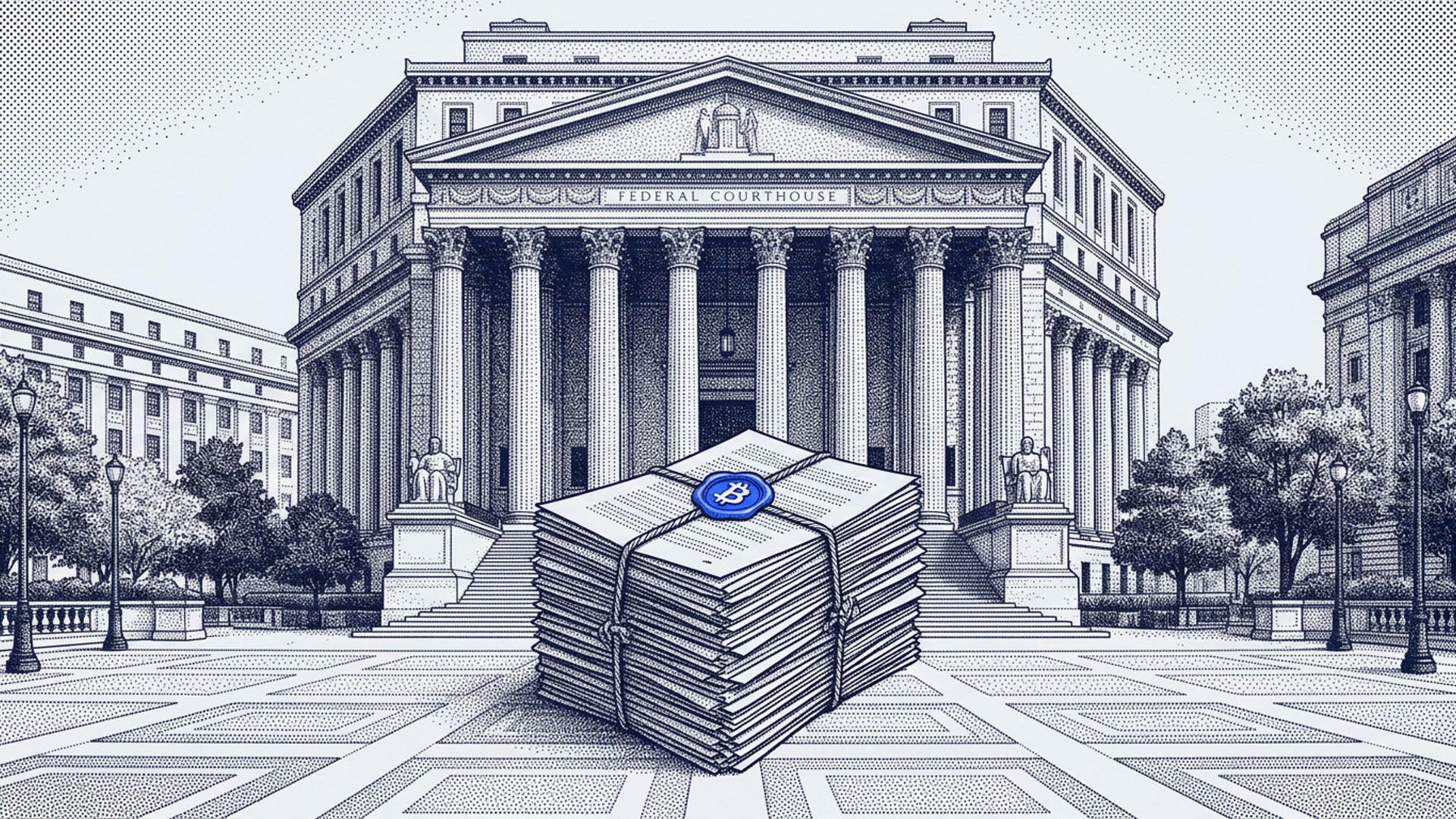
The day the largest crypto exchange in the world stopped pretending
On November 21, 2023, the United States Department of Justice announced that Binance Holdings Limited and its founder Changpeng Zhao had agreed to a combined monetary resolution of $4.316 billion across four federal agencies. The number itself, when it landed on the wires that Tuesday afternoon, was the largest corporate penalty ever assessed against a money services business in the history of the United States. The DOJ, the Commodity Futures Trading Commission, the Office of Foreign Assets Control, and the Financial Crimes Enforcement Network had been negotiating in parallel for the better part of two years, and the joint announcement was choreographed so that no single regulator would be left holding a thinner agreement than the others. Two years on, with CZ released from federal custody, a former Abu Dhabi regulator running the company, and a five-year compliance monitor reading Binance's internal Slack channels, the settlement looks less like a punishment and more like the moment a particular era of crypto ended in a courtroom in Seattle.
This article is a sober walk through what the DOJ actually required, what it did not require, and what the resolution means for anyone trying to think clearly about where the centralized exchange model now sits relative to its no-KYC alternatives.
What Binance actually pleaded to
The corporate plea agreement, filed in the Western District of Washington, covered three federal counts. Each one matters for a different reason, and they should not be collapsed into a single vague allegation of bad behavior.
- Conspiracy to conduct an unlicensed money transmitting business, in violation of 18 U.S.C. 1960
- Conspiracy to violate the International Emergency Economic Powers Act (IEEPA), which is the statute that gives OFAC its sanctions authority
- Conspiracy to violate, and willful violation of, the Bank Secrecy Act, specifically the obligation to maintain an effective anti-money-laundering program
The factual basis attached to the plea is the document worth reading. It describes a company that, by its own admission, knowingly served United States customers from 2017 through 2022 while publicly claiming it had withdrawn from the US market. It describes compliance personnel internally flagging suspicious activity and being told, in writing, that filing Suspicious Activity Reports was not a priority because Binance maintained the fiction that it had no US nexus. The DOJ press release put it plainly: "Binance turned a blind eye to its legal obligations in the pursuit of profit. Its willful failures allowed money to flow to terrorists, cybercriminals, and child abusers through its platform." That sentence, attributed to Attorney General Merrick Garland, is the line the prosecutors wanted on the front page, and it ran on the front page.
The sanctions findings are where the case stops being a generic compliance story. The factual statement identifies transactions executed for users in Iran, Syria, the Crimea region, Cuba, and North Korea. It identifies wallet clusters associated with HAMAS's military wing, with Al-Qaeda affiliates in Syria, and with ransomware operators including those tied to North Korean state activity. Binance, the government argued, had the tools to identify these flows and chose not to use them. The IEEPA count carries real weight precisely because it is the count that turns a regulatory failure into a national security matter, and it is the count that gave the DOJ leverage to demand the monitorship.
What CZ pleaded to
Changpeng Zhao's personal plea was narrower and, on paper, almost surgical. He pleaded guilty to one count: failure to maintain an effective anti-money-laundering program under the Bank Secrecy Act. He agreed to a $50 million personal financial penalty. He agreed to step down as chief executive that same day. And on April 30, 2024, Judge Richard Jones sentenced him to four months in federal prison, well below the probation department's recommendation and far below the three years prosecutors had asked for.
CZ served the sentence at the Lompoc satellite camp in California, a low-security facility, and was released on September 27, 2024. He remained, throughout the period of his incarceration and after, the beneficial owner of a controlling stake in Binance. The structural arrangement that emerged from the plea is unusual and worth naming clearly. The man who pleaded guilty to the underlying compliance failure was barred from operational control but not from ownership, and the company he founded continued to generate revenue on his behalf while he was inside.
The compliance monitorship
The piece of the settlement that will shape Binance for the rest of the decade is the five-year independent compliance monitor. The DOJ monitorship is not a quarterly audit. The monitor has standing access to internal communications, to compliance committee minutes, to transaction monitoring queues, and to the hiring and firing decisions of the chief compliance officer. The monitor reports to the DOJ, not to Binance's board, and the DOJ retains the authority to extend the monitorship if it concludes that the company has not substantially remediated.
Inside Binance, the response was a hiring sweep. Richard Teng, formerly of the Financial Services Regulatory Authority of Abu Dhabi Global Market and before that the Monetary Authority of Singapore, became chief executive on the day of the announcement. The company brought in a former senior FinCEN official as chief compliance officer, a former IRS Criminal Investigation agent to lead financial crimes intelligence, and a roster of regional compliance heads drawn almost entirely from regulated banking. The Binance Compliance Plan, as the company branded it internally, required the geographic walling-off of the .com platform from any user who could not satisfy enhanced due diligence. By mid-2024 the platform looked, from a customer-onboarding perspective, more like a tier-two European bank than the exchange that had once run a futures product with 125x leverage and no identity verification.
What the settlement did not resolve
The November 2023 resolution closed the DOJ, CFTC, OFAC, and FinCEN matters. It did not close the Securities and Exchange Commission's civil action, which had been filed separately in June 2023 and which alleged that Binance had operated as an unregistered securities exchange. That case continued to grind through the District of Columbia court system and was ultimately paused and partially withdrawn during the SEC's broader strategic retreat from crypto enforcement in 2025, but the settlement did not make it go away.
Nor did the settlement insulate the company or its employees from foreign legal exposure. Tigran Gambaryan, a Binance compliance executive and former IRS-CI special agent, was detained in Nigeria in February 2024 in a matter unrelated to the US case, held for months under conditions that drew protests from US lawmakers, and released only in October 2024 after sustained diplomatic pressure. The pattern that episode illustrated, that a globally distributed exchange remains exposed to the jurisdiction of every country where its executives physically travel, is one the settlement could not address and did not try to.
What this changes for the Directory
The editorial conclusion is direct. Binance is not a no-KYC venue. It has not been one in any meaningful sense since 2022, and after November 21, 2023, it is institutionally incapable of becoming one again. The five-year monitor, the IEEPA plea, and the OFAC consent order together create a legal architecture in which any retreat from full identity verification would itself be a fresh federal violation. We catalog Binance because it remains the largest centralized venue in the market and ignoring it would be dishonest, but we do not recommend it for any user whose threat model includes the disclosure of identity to a regulated intermediary.
The broader signal is the one worth sitting with. The "operate offshore, settle later" playbook that defined the 2017 to 2022 period now has a documented price tag of $4.316 billion plus a founder's prison term plus a half-decade of supervised compliance. That number is now the discount rate that any competing exchange has to apply to its own regulatory arbitrage. The rational response, and the one we are watching play out across the segment, is consolidation into KYC-mandated venues for the mainstream and a corresponding deepening of the genuinely non-custodial, genuinely permissionless tools at the other end of the spectrum. The directory we maintain exists in the structural gap that consolidation creates, and the Binance settlement is the document that defines the shape of the gap.
Sources
- DOJ, Binance and CEO Plead Guilty (Nov 21, 2023)
- CNBC, Binance and CZ plead guilty, $4.3 billion settlement
- FinCEN Consent Order, In the Matter of Binance Holdings Limited
- US Treasury OFAC Settlement Agreement
- Reuters, CZ sentenced to four months in prison (Apr 30, 2024)
- Wikipedia, Binance
Edit log
- 2025-10-08 : First pass drafted from the DOJ press release and the unsealed plea agreement, with a working hook focused on the dollar figure rather than the date. Flagged that the IEEPA count was buried in the original draft and needed to be lifted.
- 2025-10-21 : Restructured after re-reading the FinCEN consent order; the SAR-filing detail belongs in the corporate-plea section, not the monitorship section, and I moved it. Cut a paragraph on the Justin Sun wash-trading allegations because they sit inside the SEC matter, not the DOJ resolution.
- 2025-11-03 : Added the Gambaryan paragraph after a reader email pointed out that the original draft made the settlement sound like a clean closure. It was not. The Nigeria detention is the cleanest example of why.
- 2025-11-14 : Tightened the CZ section after the one-year anniversary coverage in the trade press. Most of those pieces leaned sentimental and I wanted ours to stay procedural. Removed an adjective-heavy sentence about Lompoc.
- 2025-11-22 : Final read for the two-year retrospective slot. Verified the release date against BOP records, confirmed Richard Teng is still CEO as of publication, and rewrote the closing paragraph to make the directory's editorial position explicit rather than implied.
Browse the directory
Find a no-KYC service for what you need.
More articles
 Investigation
A wallet that does not collect identity, paired with a Swiss IBAN that legally cannot exist without it
OffChain just announced a Swiss IBAN linked to its no-KYC mesh wallet, EUR/CHF/USD conversion on demand, a debit card, and SEPA/SWIFT in both directions, all of it "fully offline". We walk through the four ways this can actually work, and the one Swiss law makes hardest.
Read article Regulation
The comment window closes at midnight, and every US-licensed stablecoin issuer is now on the clock
FinCEN and OFAC's joint proposed rule on Permitted Payment Stablecoin Issuers under the GENIUS Act closes its public comment docket today, June 9 2026. Five obligations, USDC and PYUSD in scope, and what it means for self-custody on-ramps.
Read article Profile
The story that changed when the honeypots leaked
A 2026 working threat model for an investigative reporter covering crypto cybercrime, after the IDMerit, Sumsub, and Chen Zhi cases reshaped what an organized criminal adversary can buy. Tools, walkthrough, twenty-four hours over her shoulder.
Read article