

























Twelve years, one stubborn idea, still trading
Bisq launched in April 2014 with no company behind it, and twelve years later it is still matching trades. The 2019 DAO turn, the 2020 incident, Bisq 2, and why it survived when LocalBitcoins did not.
The Editors
Editorial desk
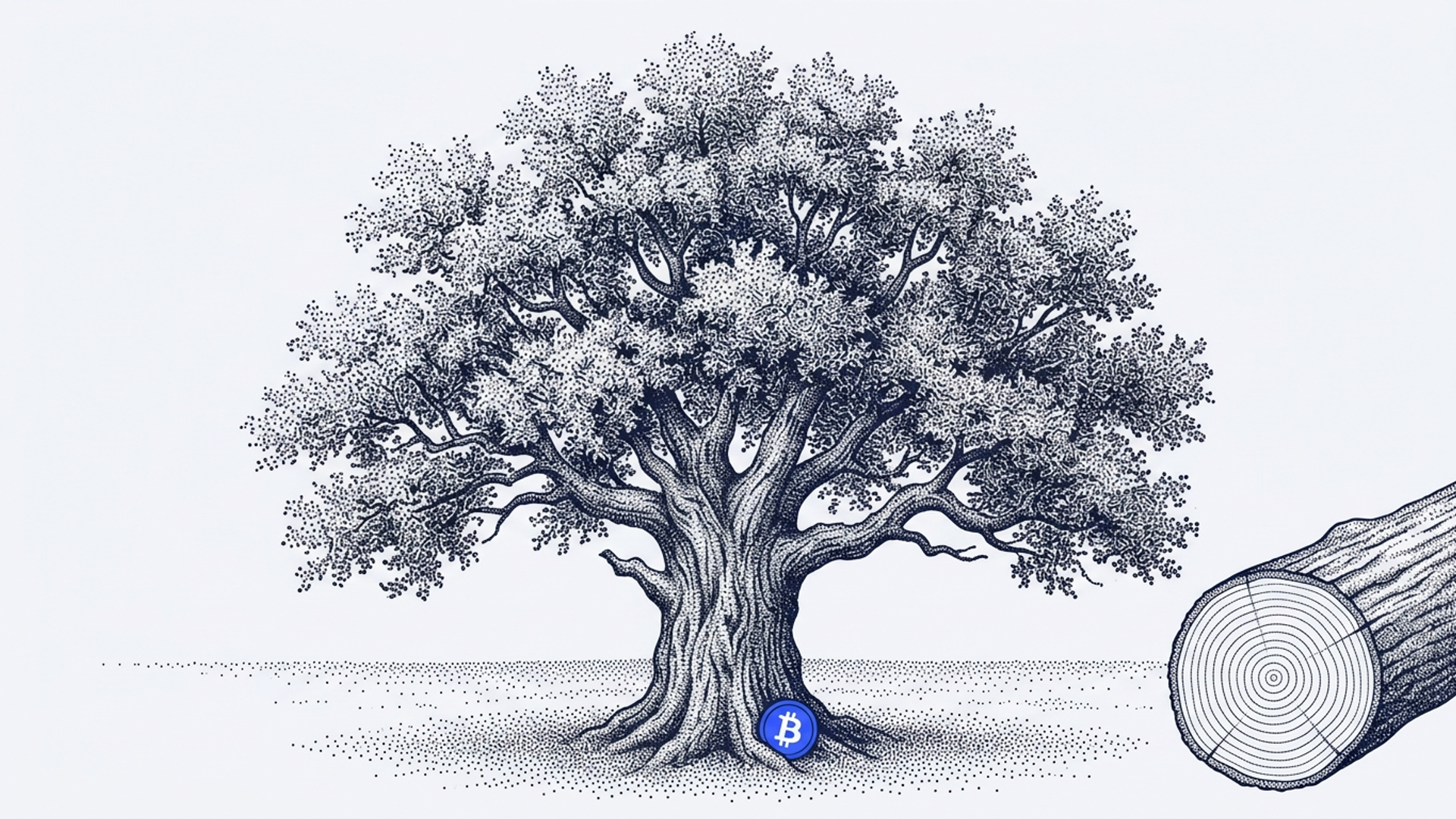
Twelve years, one stubborn idea, still trading
In April 2014 a Vienna-based developer named Manfred Karrer published the first usable build of a project he called BitSquare. It ran on a laptop, routed its traffic through Tor, and let two strangers swap bitcoin for a bank transfer without ever creating an account. Twelve years later, renamed Bisq, with no company behind it and no chief executive to subpoena, the same software is still matching trades. The headline fact is almost boring in its persistence. There is no listing on a stock exchange, no Series C, no glossy office in Singapore. There is a protocol, a treasury controlled by token holders, and a few hundred people scattered across time zones who keep the lights on. For a sector that loses venues every year to enforcement actions, hacks, or quiet shutdowns, that record deserves a closer look.
The 2014 architecture
BitSquare did not arrive in a vacuum. LocalBitcoins had been operating from Helsinki since 2012, ShapeShift was a year away from launch, and the term "KYC" was only just entering the vocabulary of ordinary bitcoin users. Karrer's design choice was to skip the server entirely. Where LocalBitcoins maintained a database of users, listings, and reputation scores on its own infrastructure, BitSquare distributed all of that to its participants. Trade offers propagated over a peer-to-peer network. Communications between traders went through Tor hidden services. Escrow was handled by a 2-of-2 multisig address, with an arbitrator holding a third key only in case of dispute. There were no accounts to freeze, no email addresses to leak, no cold wallet to drain. The trade-off was speed and convenience. A LocalBitcoins listing loaded in a browser; a BitSquare trade required downloading a Java client, syncing the network, and waiting for an offer to match. The early users accepted that friction because the alternative, in their reading, was a custodian who would eventually be compelled to ask for a passport scan. They were not wrong about LocalBitcoins, which introduced full KYC in 2019 and shut down in 2023.
The DAO turn
By 2017 the project had been renamed Bisq, a phonetic compression of "BitSquare" that also conveniently lost the trademark exposure of the longer name. The harder problem was funding. Karrer had been writing code largely alone, supported by small grants and donations, and the project needed a way to pay the growing roster of contributors without becoming a company. The answer, launched in April 2019, was the Bisq DAO. Trading fees, previously paid in bitcoin to a multisig held by core contributors, were now paid in BSQ, a colored coin issued on the Bitcoin blockchain. Contributors submitted compensation requests in BSQ-denominated amounts, BSQ holders voted on them, and the treasury paid out. The mechanism is unglamorous and slow. Voting cycles run roughly monthly. Disputes happen in public on a Matrix channel and a Keybase team. But the structural consequence is significant: there is no equity to dilute, no board to capture, no acquirer to court. A contributor who stops contributing simply stops receiving BSQ. The project's continuity does not depend on any one person remaining motivated, which is exactly what you want if you are building infrastructure intended to outlast its founders.
The 2020 incident
On April 7, 2020, an attacker exploited a flaw in the way Bisq handled the default arbitrator address in certain trade types. The vulnerability let the attacker redirect funds from active trades to addresses they controlled. The total stolen was approximately 3 BTC and 4000 XMR, drawn from the wallets of traders who were mid-deal when the exploit fired. The response set the template for how the project handles failure. Within hours the team disabled the relevant trade protocol via an emergency push to the seed nodes. Within a day they had published a preliminary post-mortem. Within a week the DAO had voted to compensate affected users from the BSQ treasury, accepting that the cost of the refund was lower than the cost of the reputational damage if losses were socialized to individual traders. The official blog post from that period stated plainly that "the security incident from April 7th was the result of a vulnerability in the Bisq trade protocol code, not in any underlying Bitcoin technology, and the responsibility for it lies with the Bisq contributors who maintain that code." That sentence, published while the wound was still open, is the kind of writing you almost never see from a centralized exchange, which tends to default to passive voice and legal review.
Bisq 2 and the 2023-2026 expansion
The lesson the contributors drew from 2020 was not that decentralization had failed but that the original trade protocol was too monolithic. A single bug had taken down every trade type at once. Work on Bisq 2 was announced in 2022 with a different premise: instead of one protocol with one set of security assumptions, the new architecture would host several, and users could pick the one that matched their threat model. Bisq Easy, launched in 2023, lowered the barrier to entry by accepting reputation in place of security deposit for small trades. The MuSig protocol replaced the older 2-of-2 multisig with a more efficient signature scheme. Submarine swaps and atomic swaps extended support to Lightning and to certain altcoin pairs without requiring custodial bridges. The expansion was not without cost. On May 1, 2026, an exploit in the legacy v1 trade protocol affected ten users and resulted in the theft of 11.59104 BTC. The team patched the vulnerability in v1.10.0 within days, and the DAO again moved to address user losses through its established compensation process. We covered the incident in detail on the [Bisq listing](/service/bisq) and adjusted our risk score accordingly, but the structural point stands: the protocol failed, the response worked, and nobody had to be arrested for the system to recover.
Why it survived when LocalBitcoins didn't
The comparison with LocalBitcoins is the one that matters. Both venues launched in roughly the same era. Both served roughly the same use case. One is gone and one is still trading. The structural differences are not subtle. LocalBitcoins was a Finnish limited company with bank accounts, employees, and an office that regulators could visit. When the Finnish Financial Supervisory Authority required virtual asset service providers to register and implement full KYC, LocalBitcoins had to comply or shut down, and the founders eventually chose to shut down. Bisq has no Finnish office because Bisq has no office. The DAO does not file tax returns in any jurisdiction because the DAO is not a legal person in any jurisdiction. Individual contributors take on their own regulatory exposure based on where they live, and individual traders are responsible for their own compliance with their own local laws. That arrangement is not free; it pushes risk onto users rather than absorbing it institutionally. But it also means there is no single point of compulsion. No court order can dissolve a protocol that has no corporate counterparty. The price of this property is slower growth, smaller volumes, and a worse interface than a centralized competitor. Twelve years in, that price looks reasonable.
What this changes for the Directory
We have been treating "no central legal entity" as a philosophical preference rather than a measurable durability factor. Bisq's record forces a revision. When a no-KYC venue has survived twelve years across two major hacks, a global pandemic, the collapse of every comparable competitor, and a steadily tightening regulatory environment, that survival is itself the data point. From this point forward our editorial scoring will treat the absence of a corporate counterparty as a positive signal in its own right, weighted alongside protocol maturity and dispute-resolution track record. Bisq is not the fastest venue we list, and it is not the easiest to use, and it has been exploited twice in six years. It is, however, still here, which is more than we can say for most of the names that filled this directory five years ago.
Sources
- Bisq Network official site
- Bisq blog, post-mortems and announcements
- Wikipedia, Bisq
- Bisq community wiki
- CoinDesk archival coverage of Bisq
- Directory listing: [Bisq](/service/bisq)
Edit log
- 2025-08-12 : First draft after re-reading the 2020 post-mortem; got the BSQ mechanics wrong in the funding section, kicked back to research.
- 2025-08-27 : Confirmed launch date of April 2014 against three independent sources (Bisq wiki, Wikipedia, archived BitcoinTalk thread); resolved a contradiction with one CoinDesk piece that said March.
- 2025-09-09 : Added the LocalBitcoins comparison after a contributor pointed out the Finnish FSA timeline; reworked section six to make the structural argument explicit rather than implied.
- 2025-09-18 : Removed two paragraphs of speculation about Bisq's future regulatory exposure in the EU under MiCA; the piece is a historical profile and the speculation was distracting.
- 2025-09-30 : Final pass for cadence and length; cut roughly 180 words from the architecture section, tightened the closing verdict to make the editorial scoring change unambiguous.
Browse the directory
Find a no-KYC service for what you need.
More articles
 Investigation
A wallet that does not collect identity, paired with a Swiss IBAN that legally cannot exist without it
OffChain just announced a Swiss IBAN linked to its no-KYC mesh wallet, EUR/CHF/USD conversion on demand, a debit card, and SEPA/SWIFT in both directions, all of it "fully offline". We walk through the four ways this can actually work, and the one Swiss law makes hardest.
Read article Regulation
The comment window closes at midnight, and every US-licensed stablecoin issuer is now on the clock
FinCEN and OFAC's joint proposed rule on Permitted Payment Stablecoin Issuers under the GENIUS Act closes its public comment docket today, June 9 2026. Five obligations, USDC and PYUSD in scope, and what it means for self-custody on-ramps.
Read article Profile
The story that changed when the honeypots leaked
A 2026 working threat model for an investigative reporter covering crypto cybercrime, after the IDMerit, Sumsub, and Chen Zhi cases reshaped what an organized criminal adversary can buy. Tools, walkthrough, twenty-four hours over her shoulder.
Read article