
















 Featured
10.0
Independent & unsponsored · No ads, no tracking · verified every 6 hours
Published December 29, 2024 · Last updated 1 month ago
ZK shielded pool for Dotsama assets.
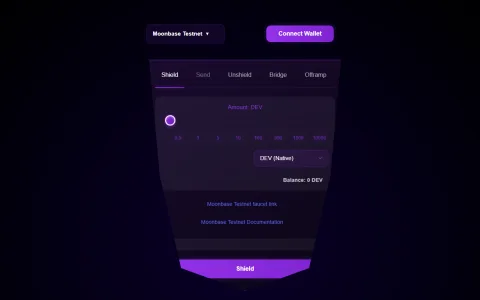
Kusama Shield is a zero-knowledge (ZK) powered shielded pool deployed on the Kusama network. As of 2026-05-30, it operates as a sovereign smart contract on Kusama Assethub, utilizing PolkaVM (a RISC-V based virtual machine) to enable private transactions across multiple assets. The project originated from a treasury proposal (#2659) seeking to bring Halo2 ZK proofs and Solidity-compatible smart contracts to the Dotsama ecosystem via Moonriver parachain integration.
The protocol allows users to deposit XC-20 parachain assets and ERC-20 tokens into a shielded pool, generating ZK proofs that obscure sender identity, recipient, and transaction amounts. Unlike centralized mixers, Kusama Shield emphasizes permissionless operation with no compliance breaks or backdoors.
Kusama Shield is designed as a fully permissionless, non-custodial privacy tool. There is no account registration, email requirement, or identity verification. The service connects directly to user-controlled wallets, and the smart contract architecture ensures no centralized entity can freeze funds or enforce KYC retroactively.
The project has also expanded into KYC-free fiat offramps. According to a 2026 Polkadot Forum announcement, Kusama Shield v2 supports peer-to-peer fiat settlement methods including Wise, Revolut, Cash App, Venmo, Monzo, IDFC First Bank, Luxon Pay, Alipay, Mercado Pago, and PayPal for DOT conversions-none of which require identity verification through the protocol itself.
Kusama Shield employs Halo2 zero-knowledge proofs for its shielded pool implementation. The architecture stores commitments on-chain without revealing user identity or balance. The project is open-source with repositories hosted on Codeberg, including interface code and Solidity helper contracts with Foundry tests.
Governance security derives from Kusama's decentralized on-chain democracy, which the project cites as more resilient than centralized alternatives. Referendum #631 (executed approximately three months prior to this review) approved Bounty 32 funding for the v2 stable version, with curators including founder Flipchan, Erin (byteboro), and James Slusser reviewing milestone deliveries.
Privacy limitations exist. A Polkadot Forum discussion from January 2026 raised concerns about structural privacy gaps: visible bridge transactions, lack of relayers, and centralized on-ramp dependencies that could compromise anonymity. The project has proposed a k-anonymity score to communicate privacy levels, though this metric is not yet fully implemented.
The official site does not publish specific fee schedules or deposit limits. The 2026 roadmap suggests ongoing development toward broader asset support and improved UX. Third-party evidence indicates a 0.8% transaction fee mentioned in YouTube coverage, though this figure is unverified on the official site and should be treated as speculative.
Supported assets include Dotsama ecosystem tokens (DOT, KSM) and potentially any XC-20/ERC-20 compatible asset. The v2 expansion adds P2P fiat offramp options, though these rely on counterparty trust rather than protocol-level settlement.
The interface is accessible via clearnet at kusamashield.laissez-faire.trade with a secondary presence at shield.markets. Codeberg repositories show active issue tracking for supported wallets and asset listings, suggesting ongoing UX refinement. The project maintains transparency through public governance forums and treasury proposal documentation.
Support appears community-driven through Polkadot/Kusama governance channels, Discord (KusDAO), and Codeberg issue trackers. No dedicated customer service team is evident, consistent with the decentralized ethos.
Kusama Shield suits privacy-focused users already embedded in the Polkadot/Kusama ecosystem seeking non-custodial asset shielding. Developers may find value in the planned Ethereum toolkit integration (Kohaku) for adding shielded transfers to EVM dApps. Users requiring fiat offramps without KYC may benefit from the v2 P2P options, though with reduced privacy guarantees compared to the core shielded pool.
The project remains experimental-governance-funded, actively developed, but not yet battle-tested at scale. Users comfortable with Zcash-style shielded pools who want equivalent functionality for Dotsama assets will find the closest conceptual match here.
No account required at all.
Kusama Shield requires no identity verification, email, or account creation. The protocol itself collects no user data-privacy derives from ZK proofs and non-custodial smart contract interaction. However, practical anonymity depends on avoiding traceable on-ramp sources and bridge transactions; the absence of a relayer network means blockchain-level correlation risks persist. No privacy incidents or data breaches were identified in the evidence.
No
Custodial
No
Requires email
No
Logs IP
Verdict
Kusama Shield is the most advanced privacy tool purpose-built for the Dotsama ecosystem, offering genuine zero-knowledge shielding without KYC friction. It suits technically proficient users who accept experimental risk for sovereignty. Those needing proven, battle-tested privacy may prefer established alternatives like Monero-native services until the relayer infrastructure and k-anonymity metrics mature.
This review is monitored and refreshed regularly.
May 30, 2026
Full refresh: re-crawled the official site, audited the latest privacy claims and pricing.
May 16, 2026
Added v2 fiat offramp details from Polkadot Forum announcement.
February 10, 2026
Updated governance status: Referendum #631 executed for Bounty 32 top-up.
December 26, 2025
Noted privacy limitations raised in January 2026 forum discussion.
September 20, 2025
Confirmed PolkaVM migration and Kohaku toolkit integration plans.
February 5, 2025
Tracked open Codeberg issues for wallet support and asset expansion.
December 29, 2024
Initial review published.
5 user reviews
moneromaxi
Finally a no-KYC shielded pool that doesn't run on Ethereum. The governance funding model is way more resilient than VC-backed privacy tools.
anon_trader
Works for basic DOT shielding but the UX is still rough. Waiting for more wallet support before moving larger amounts.
privacyfirst
Good concept but the lack of relayers is a real problem. Your bridge deposit is visible on-chain if you're not careful with source funds.
xmr_only
Flipchan's transparency about limitations is refreshing. Most privacy projects overpromise. The k-anonymity score idea could set a standard.
sat_stacker
Site is up but couldn't figure out how to actually use it. No clear fee info and the interface feels unfinished.