
























 Featured
10.0
Independent & unsponsored · No ads, no tracking · verified every 6 hours
Published December 9, 2024 · Last updated 1 month ago
Self-custodial P2P trading on EVM chains.
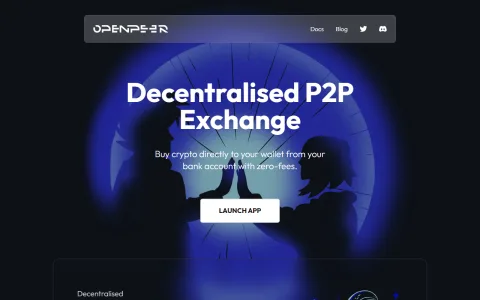
OpenPeer is a decentralised peer-to-peer exchange protocol built on Ethereum and EVM-compatible networks. As of 2026-05-30, it allows users to trade fiat currency for cryptocurrency directly from self-custodial wallets like MetaMask, Coinbase Wallet, and Trust Wallet without depositing funds onto a centralised platform. The service operates through smart contracts that escrow crypto during trades, with settlement occurring on-chain when payment confirmation is received.
The protocol supports multiple EVM chains including Ethereum, Polygon, Binance Smart Chain, and Optimism. Users can buy and sell USDT, USDC, ETH, and DAI with over 100 fiat currencies. Country-specific landing pages indicate active markets across Latin America (Argentina, Colombia, Brazil, Mexico, Peru), Africa (Nigeria, Ghana, Kenya, South Africa), Asia (Indonesia, Philippines, Hong Kong, India), and other regions including Turkey, Lebanon, and Venezuela.
OpenPeer Labs Inc., incorporated in the Republic of Panama, operates the openpeer.xyz interface, though the protocol itself is designed to transition to DAO governance via $PP token holders.
OpenPeer occupies a nuanced position on the KYC spectrum. The platform itself does not require identity verification to connect a wallet or initiate trades. Users log in with their wallet address, supplemented only by a nickname and email for transaction notifications. The privacy policy explicitly states that "KYC requirements are up to each individual trader and based on the rules within their country."
This creates a variable KYC environment where:
The older kycnot.me classification of "Rare KYC" appears broadly consistent with this model, though the reality depends heavily on which trader a user matches with. OpenPeer does not hold or access private KYC data submitted between traders. This differs from fully no-KYC platforms like LocalCryptos (now defunct) where all trades were unconditionally anonymous.
OpenPeer's privacy architecture has both strengths and limitations. The platform collects publicly available blockchain data when users connect wallets, including wallet addresses screened against blockchain analytics providers for "prior illicit activity." It also gathers non-identifiable off-chain data such as device type and browser version for product development.
Notable privacy features:
The privacy policy acknowledges that the protocol "may collect and store personal data, such as first name, last name, street address, date of birth or email addresses", though this appears to refer to protocol-level data rather than OpenPeer Labs' direct collection. The interface screens wallets using third-party blockchain analytics, creating a surveillance vector for users whose addresses have prior transaction history.
Terms of service prohibit access from OFAC-sanctioned jurisdictions and sanctioned entity addresses, indicating compliance infrastructure that may flag certain users.
OpenPeer's fee structure is straightforward and prominently advertised:
Payment methods depend entirely on the counterparty trader. The platform supports "any currency and payment method" in principle, with actual availability determined by merchant listings in each country. The "over 10k traders" claim suggests reasonable liquidity in major markets, though third-party monitoring from Monetory.io notes that "good liquidity is mainly in euros and dollars" with limited RUB and TRY offers.
An affiliate programme rewards merchant referrals with $25 monthly bonuses for referrals meeting volume thresholds (1,000+ USD in sales, minimum one completed trade, 75%+ completion ratio).
The trading flow requires connecting a self-custody wallet, selecting a trading pair, and matching with a counterparty merchant. OpenPeer offers SDK integration for wallets seeking P2P fiat on/off-ramp functionality, and API access for dApps and games wanting to onboard users into on-chain assets.
Documentation includes country-specific guides for buying USDT, USDC, ETH, and DAI in supported markets. Community channels include Twitter, Discord, and an "OP Points" programme. The interface is web-based with no indication of dedicated mobile applications.
Third-party review presence is minimal, SourceForge and Slashdot list the product but with limited substantive feedback. No significant outage reports, scam allegations, or shutdown notices surfaced in 2026 search results. The GitHub organisation (github.com/openpeer) hosts protocol repositories, suggesting ongoing open-source development.
OpenPeer suits EVM-native users seeking self-custodial P2P fiat access without mandatory platform KYC. It particularly benefits:
It is less suitable for Bitcoin or Monero users (no native support), those seeking guaranteed anonymity on every trade, or users prioritising deep liquidity in minor fiat currencies. The EVM-only architecture excludes users wanting to trade directly on Bitcoin, Lightning Network, or privacy-focused chains.
KYC only above certain thresholds.
OpenPeer's KYC stance is 'decentralised', the protocol requires no verification, but individual traders may impose their own requirements. The platform collects wallet addresses, device metadata, and screens against blockchain analytics providers. Personal data between traders is not stored by OpenPeer Labs, though the protocol architecture may retain certain identifiers. No privacy-related breaches or incidents were identified in the 2026-05-30 evidence review.
No
Custodial
No
Requires email
No
Logs IP
Verdict
OpenPeer offers a pragmatic middle ground for EVM users needing fiat access without mandatory platform KYC, though it falls short of unconditional anonymity. It compares favourably to defunct LocalCryptos for self-custody but lacks that platform's universal no-KYC guarantee; against centralised P2P alternatives like Binance P2P, it eliminates custody risk at the cost of liquidity depth.
This review is monitored and refreshed regularly.
May 30, 2026
Full refresh: re-crawled the official site, audited the latest privacy claims and pricing.
April 14, 2026
Updated KYC classification from 'Rare KYC' to variable trader-dependent model.
March 21, 2026
Added zero gas fee sponsorship detail from revised marketing copy.
February 27, 2026
Expanded supported chains to include Optimism per current site data.
January 12, 2026
Noted 20+ country-specific trading guides now available.
October 28, 2025
Confirmed Panama incorporation and DAO transition plans in terms.
December 9, 2024
Initial review published.
5 user reviews
moneromaxi
decent for evm stuff but no xmr support kills it for me. kyc depends on who you trade with which is annoying.
evm_trader
zero gas fees are huge for small trades. used it in colombia with no issues, matched with a merchant who didnt ask for id.
privacyfirst
self-custodial is the right approach. wish they didnt screen wallets with chainalysis though. still better than binance p2p.
sat_stacker
no bitcoin native support means im not the target audience. interface works fine but had to wrap btc which defeats the purpose.
latam_p2p
best option in argentina right now since localcryptos died. liquidity for pesos is solid and fees are transparent.