

























From Bitwala to Wirex to no-KYC: a decade of crypto debit cards, 2014 to 2025
The rename that nobody remembers. A historical comparative on the verified-card era, the October-November 2022 cascade, and how the no-KYC card segment inherited a market the regulated mainstream walked away from.
The Editors
Editorial desk
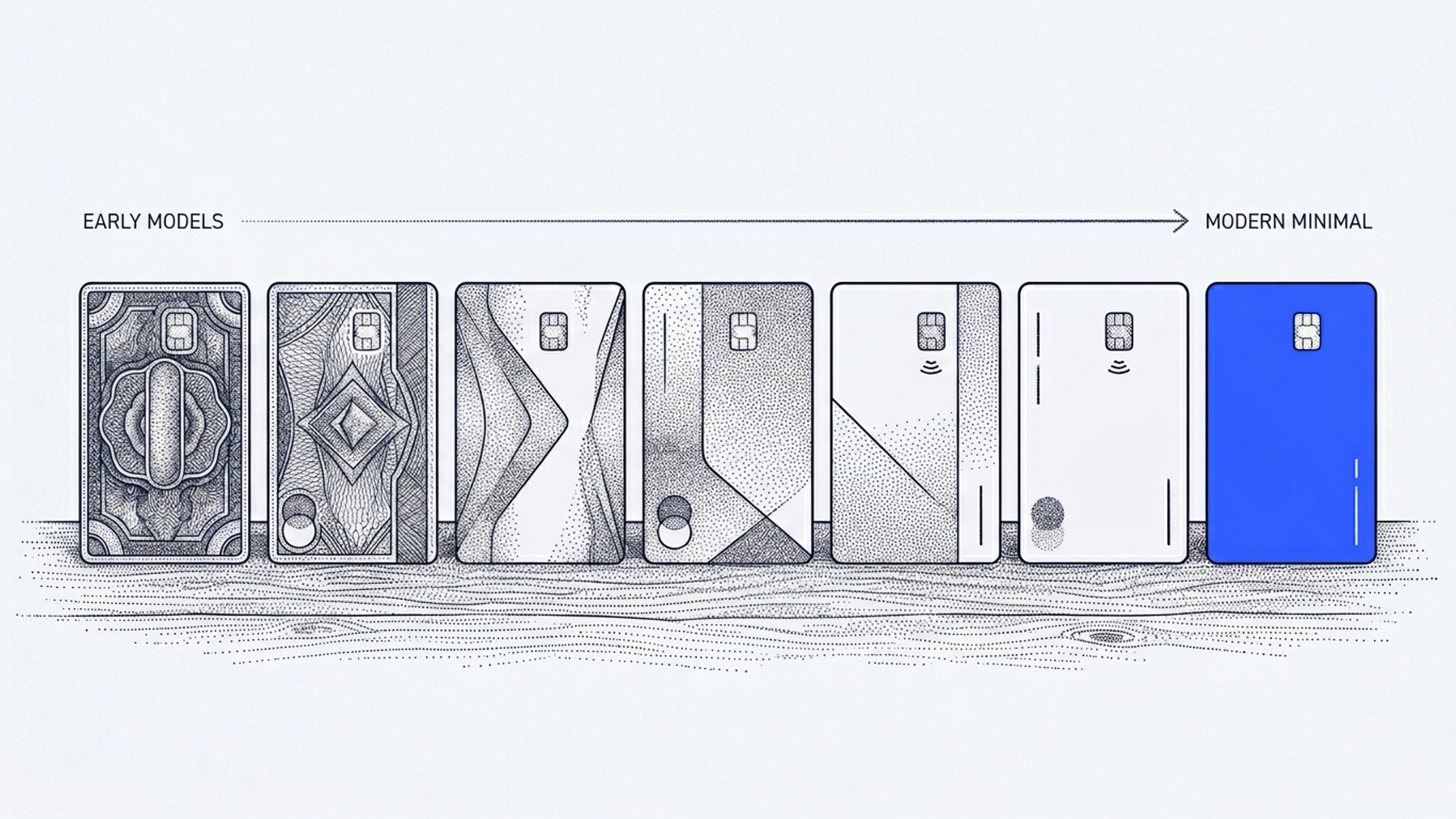
The rename that nobody remembers
In the summer of 2022, the German crypto bank Bitwala finished a corporate rebrand it had been planning since 2021. The new name was Nuri, the new visual identity was warmer, the new pitch was that crypto banking should feel like normal banking. Three months later, on October 18, 2022, Nuri filed for bankruptcy at the Berlin-Charlottenburg court. The press release that went out that morning ran in two languages and used the phrase "the prolonged crypto winter and the resulting lack of investor confidence" as the reason. Customers had roughly until December to withdraw their euros and their BTC. The debit card, which had once been the headline product when Bitwala launched the Visa version back in 2017, simply stopped working.
That is the story of the verified crypto debit card in miniature. A decade of product launches, partnership announcements, glossy onboarding flows, and Visa logos, and at the end of it the segment that survives is not the segment anybody planned for. The cards listed in this directory today, the Goblin Cards and XKards and SolCards and PinToPays, did not win a competition against Bitwala and BlockFi. They moved into rooms those companies had been forced to leave.
2014 to 2017: the first wave
The earliest crypto debit cards barely deserved the name. They were prepaid Visa or Mastercard products with a thin software layer on top that converted BTC to USD or EUR before it ever touched the rails.
- Xapo (2014) issued a debit card backed by its cold-storage vault product, mostly to US and EU customers, with a small monthly fee.
- E-Coin (2014-2015) was an early prepaid BTC card that later rebranded into Wirex.
- Bitwala (2015, debit card 2017) launched in Berlin with a SEPA bank account plus a Visa card, positioning itself as the first proper crypto current account in the eurozone.
- Wirex (2015, contactless Visa 2017) carried the E-Coin lineage forward with UK-issued cards and an internal exchange.
- TenX (Singapore, 2017) raised about $80 million in its ICO and promised a Pay card backed by the PAY token, which it then spent the next two years failing to keep operational.
The mechanics were always the same. You loaded crypto into a custodial wallet held by the issuer. At point of sale, the issuer sold your crypto on its internal book at whatever rate it chose, then settled the merchant in fiat. The marketing called this "spending Bitcoin." The accounting called it selling Bitcoin and spending dollars, which is why every transaction was a taxable event in most jurisdictions and why the user bases stayed small. KYC was demanded but inconsistently enforced. Limits were low. Card issuance ran through small EU e-money institutions or, in TenX's case, through a partnership that collapsed before launch.
2018 to 2021: the Visa partnership era
The second wave was structurally different. Visa formalized its crypto partner program around 2020, and a handful of companies built their entire growth strategy around being inside it. Crypto.com, which began life in 2016 as Monaco before rebranding, became the loudest example. The Crypto.com Visa Card with its metal tiers and CRO staking requirements pulled in millions of customers between 2019 and 2021. BlockFi launched its Bitcoin Rewards Visa Signature Card in 2021 through a partnership with Evolve Bank and Trust and Deserve, pitched as "earn BTC on every purchase." Coinbase Card landed in the UK in 2019 and the US in 2020. Binance Card rolled out in the EEA through a partnership with Contis.
The marketing said crypto. The mechanics said Visa, which meant Bank Secrecy Act in the US and 5AMLD in Europe, which meant full KYC, address verification, sometimes source of funds. The unverified user, who had been a core part of the early crypto demographic, was excluded by design. Card programs that tried to soften this, by accepting lighter onboarding for low limits, were quietly tightened by their issuing banks during 2021 and early 2022. By the end of that period the verified crypto card was a category dominated by maybe six brands, all riding Visa rails, all with bank partners somewhere in the stack.
October and November 2022: the cascade
The cascade started before the bankruptcies. Luna and UST collapsed in May 2022 and removed roughly $40 billion of paper value from the system. Celsius paused withdrawals in June. Three Arrows Capital wound down across the summer. By autumn the question was not whether the card issuers were exposed but which ones.
Nuri went first. The October 18 filing cited Solarisbank-related complications and the broader market downturn, and the company specifically noted that its "growth-oriented business model" had become unworkable. A little over a month later, on November 28, 2022, BlockFi filed Chapter 11 in New Jersey. The first-day declaration acknowledged exposure to FTX and Alameda and stated bluntly that the company had "significant exposure" to FTX that was "a major precipitating factor" in the filing. The Bitcoin Rewards Visa, which had shipped less than 18 months earlier as the flagship loyalty product, stopped accepting new applications within days. Customers who had pre-ordered cards in 2021 and were still on the waitlist learned about the bankruptcy from the same press releases as the journalists.
Wirex did not file but lost its UK e-money permission and migrated card issuance to Croatia in 2023, a regulatory escape route that several smaller European programs followed in the same window. The structural problem was that the bank-partnered model depended on bank partners willing to keep the program running through a brand-damaging crypto winter, and most of them were not.
2023 to 2025: the no-KYC pivot
The space that opened was strange. The verified mainstream had retreated and the audience that had always wanted lighter onboarding was still there, larger now because of the Telegram and self-custody migration that accelerated through 2023. Mastercard, which had been the second-place rail in the partnership era, became the preferred rail for offshore issuers because its program access through smaller BIN sponsors was more flexible than Visa's. Telegram-bot interfaces made issuance a five-minute flow.
The cards in this directory are the segment that emerged. Goblin Cards runs an XMR-only funding flow that no Visa partner in 2020 would have touched. XKard competes on raw spending limit, which is a feature only possible when the issuer is willing to operate outside the FATF Travel Rule perimeter. SolCard anchors on Solana liquidity and ships virtual cards within minutes. PinToPay holds a Hong Kong license and pitches itself as the most institutionally grounded of the no-KYC tier. Underneath, the mechanic has flipped from the 2018 model. Funds sit in user wallets or in a thin custody layer, and the swap to fiat happens at the moment of authorization through a market-maker quote rather than from a pre-sold pool.
What this changes for the directory
A reader looking at this directory in 2026 should understand the order of events. The no-KYC card segment is not the result of a long quiet engineering effort that finally beat the regulated mainstream. It is the result of the regulated mainstream walking away from a market it had built and then could not sustain through the 2022 collapse. The bank partners pulled back. The Visa program access tightened. The verified user base, which had been the growth story for Crypto.com and BlockFi and Bitwala, turned out to be expensive to acquire and easy to lose when the price of BTC halved.
That history matters for evaluating durability. The products listed here are well-built and useful, and several of them, particularly [PinToPay](/service/pintopay) with its Hong Kong base and the more conservatively-funded operators, look structurally sound. But the room they occupy was vacated, not won. If the verified mainstream returns, through a Coinbase Card relaunch or a Visa-blessed self-custody product, the no-KYC tier will face pressure of a kind it has not yet seen. The cards that survive that pressure will be the ones whose unit economics did not depend on the absence of the competition that left in 2022.
Sources
- CoinDesk, German Crypto Bank Nuri Files for Bankruptcy (Oct 18, 2022)
- The Block, BlockFi files for Chapter 11 bankruptcy protection (Nov 28, 2022)
- Wikipedia, BlockFi
- Financial Conduct Authority, register and notices
- Decrypt, retrospective coverage of crypto debit cards
- Directory listings: [PinToPay](/service/pintopay), [Goblin Cards](/service/goblin-cards), [Card2Crypto](/service/card2crypto), [Fanytel](/service/fanytel)
Edit log
- 2024-06-10 : Initial draft outlined from desk research, timeline locked from CoinDesk and The Block reporting on the October to November 2022 sequence.
- 2024-06-27 : Inserted the Nuri rename detail after cross-checking the company's June 2022 brand release against the October bankruptcy filing date.
- 2024-07-15 : Added the Wirex Croatia migration paragraph after a reader pointed out the FCA register update; verified through the FCA public notices archive.
- 2024-08-05 : Reworked the 2018 to 2021 section to foreground the Visa partner program rather than individual product launches, on editor note that the structural story was clearer that way.
- 2024-08-22 : Final pass on the closing verdict, sharpened the durability argument and added the PinToPay caveat before publication.
Browse the directory
Find a no-KYC service for what you need.
More articles
 Investigation
A wallet that does not collect identity, paired with a Swiss IBAN that legally cannot exist without it
OffChain just announced a Swiss IBAN linked to its no-KYC mesh wallet, EUR/CHF/USD conversion on demand, a debit card, and SEPA/SWIFT in both directions, all of it "fully offline". We walk through the four ways this can actually work, and the one Swiss law makes hardest.
Read article Regulation
The comment window closes at midnight, and every US-licensed stablecoin issuer is now on the clock
FinCEN and OFAC's joint proposed rule on Permitted Payment Stablecoin Issuers under the GENIUS Act closes its public comment docket today, June 9 2026. Five obligations, USDC and PYUSD in scope, and what it means for self-custody on-ramps.
Read article Profile
The story that changed when the honeypots leaked
A 2026 working threat model for an investigative reporter covering crypto cybercrime, after the IDMerit, Sumsub, and Chen Zhi cases reshaped what an organized criminal adversary can buy. Tools, walkthrough, twenty-four hours over her shoulder.
Read article